Find
Clear IA · discovery · transparency
UX/Service Design • Design Strategy • Design Lead
MY WORKING · SERVICE DESIGN · PLATFORM STRATEGY
Only 1 in 5 enterprise teams were adopting existing internal solutions. I led the Service Design work that reframed this from a marketplace problem into an end-to-end engineering journey problem — then translated that direction into a platform service model connecting discovery, quality, governance and self-service.
TL;DR
IN SHORT
Internal solutions existed, but most teams still rebuilt similar capabilities or turned to external vendors. The issue was broader than findability: inconsistent quality, weak guidance and fragmented producer-to-consumer journeys made reuse difficult.
Lead the Service Design work from diagnosis to service strategy, connecting consumer adoption with the producer processes, standards and governance required to make reusable technology trustworthy.
Shift from building another marketplace interface to designing the service around it: a coherent engineering journey where teams can discover, evaluate, publish and consume reusable solutions with confidence.
THE CHALLENGE
ING already had internal technology solutions, yet only around one in five enterprise teams chose to adopt them. Teams often rebuilt functionality locally or bought externally, creating duplicated effort, longer development cycles and additional cost.
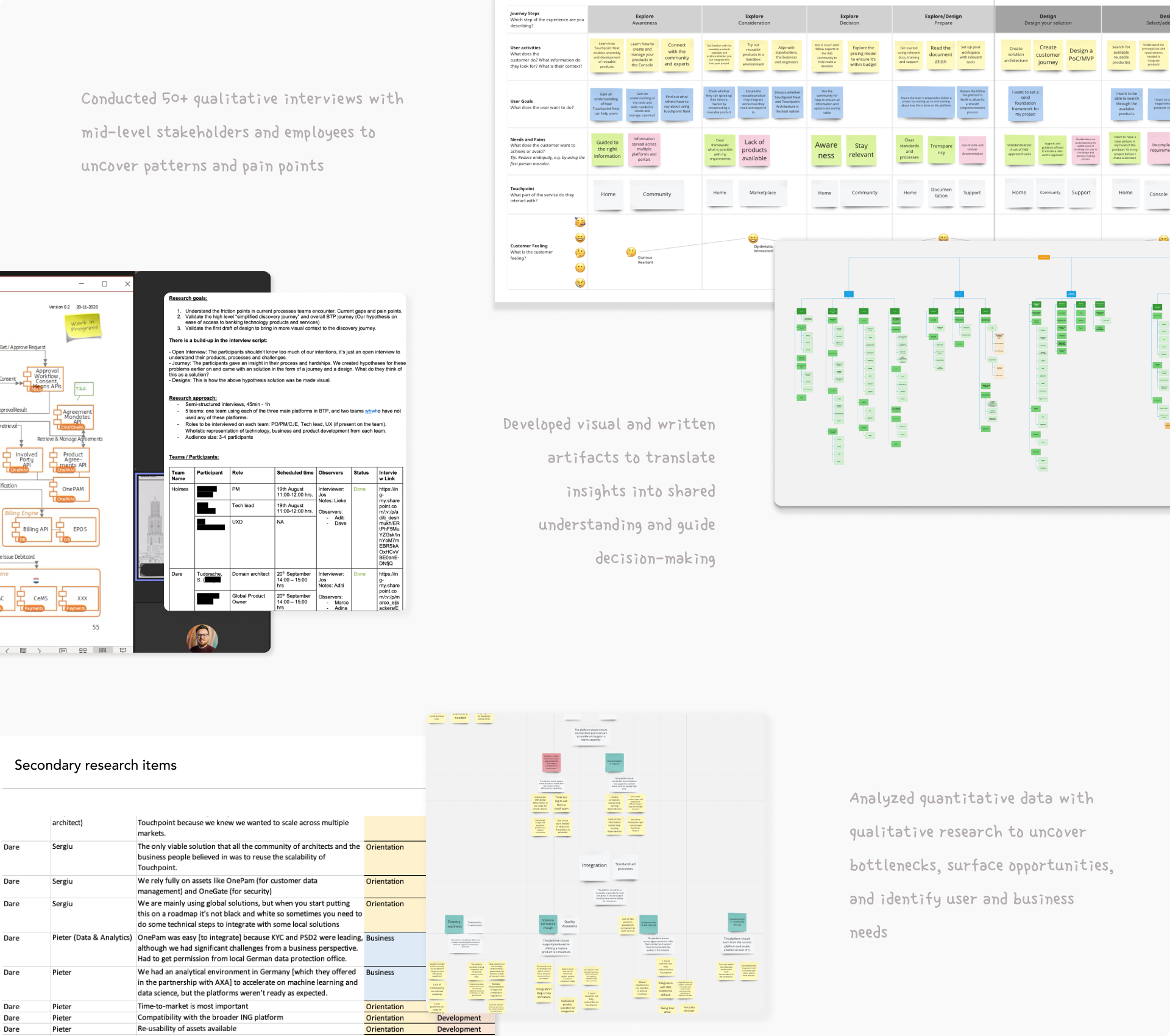
I designed and led mixed-methods research across development teams, managers and executives, combining 50+ interviews with internal reports and platform usage data. The evidence changed the problem definition: adoption depended on much more than making solutions visible.
EVIDENCE · RESEARCH
I combined qualitative interviews with journey mapping, secondary research and quantitative analysis. The recurring barriers were inconsistent solution quality, weak producer–consumer communication, insufficient onboarding and support, and low UX maturity in how internal services were shaped.
01 · REFRAMING THE PROBLEM
Research exposed barriers around inconsistent quality, unclear communication, onboarding and support. I used that evidence to expand the scope from designing a marketplace interface to improving how producers and consumers interact across the full reuse lifecycle.
EVIDENCE · SERVICE MODEL
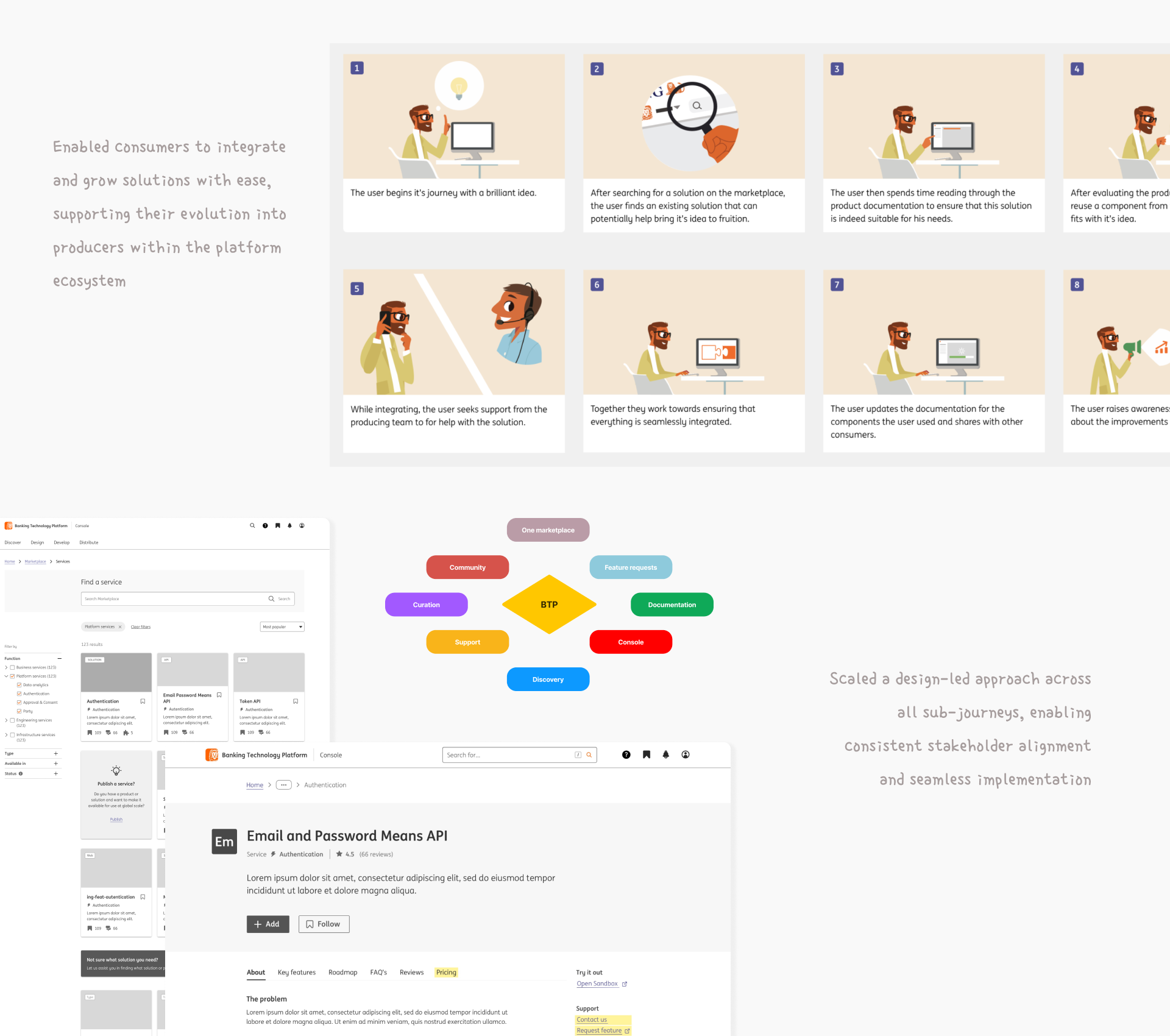
Mapping the consumer journey showed that adoption depended on what happened before and after finding a solution: evaluation, documentation, integration, support, feedback and the path from consumer to producer. This became the basis for a wider Banking Technology Platform service model.
A marketplace could improve findability, but it could not create reuse on its own.
Teams also needed confidence in quality, clearer guidance, transparent ownership and a reliable path from discovery to integration.
02 · DESIGNING THE SERVICE
I translated the research into a user-centred service strategy spanning OneMarketplace, the platform console and supporting journeys such as discovery, feature requests, community and support. This gave consumer and producer experiences one shared model instead of treating each touchpoint as a separate product problem.
Clear IA · discovery · transparency
Quality · documentation · guidance
Integration · onboarding · support
Publishing · feedback · community
Insights · ownership · continuous learning
EVIDENCE · PRODUCT DIRECTION
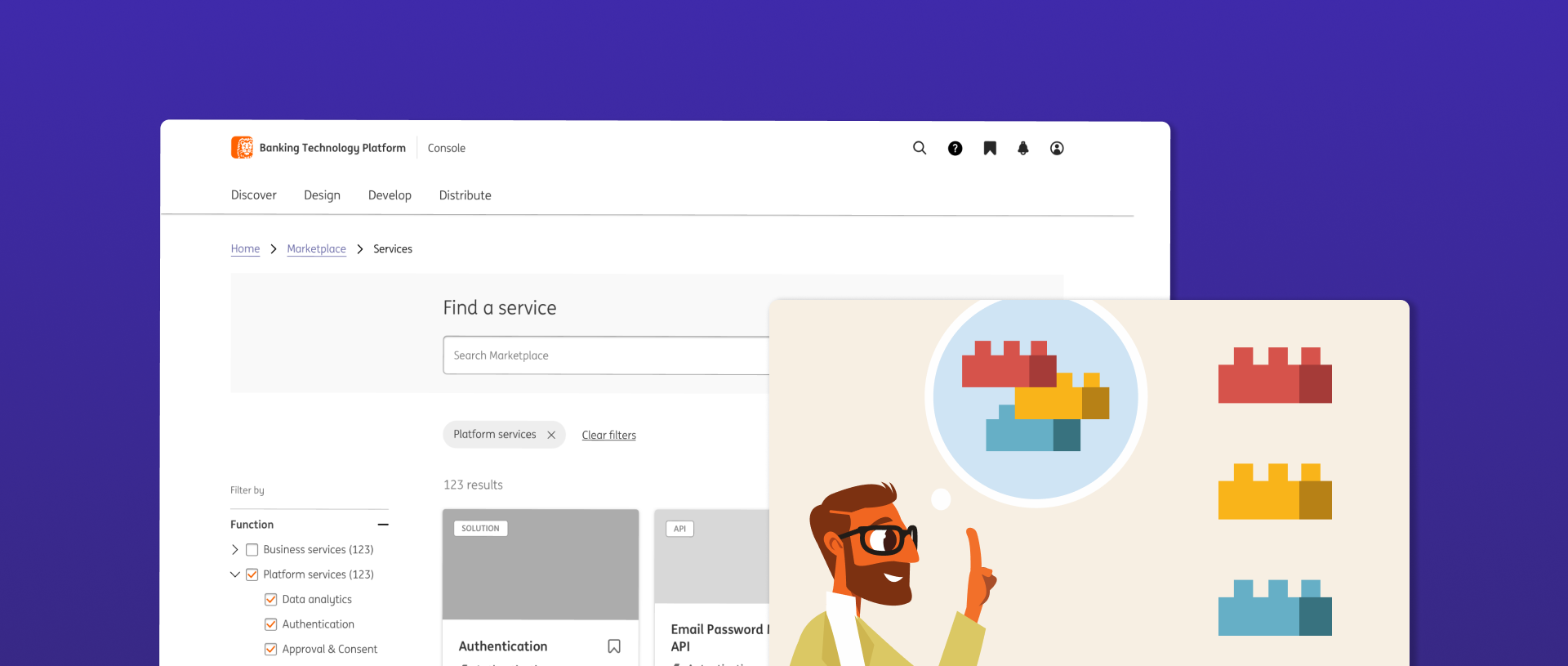
The marketplace was designed as one entry point into the wider ecosystem: helping teams find and evaluate reusable solutions while connecting them to documentation, support, community, feature requests and platform tooling.
03 · THE SYSTEM BEHIND REUSE
The consumer journey exposed a second systems problem: teams could only reuse solutions confidently if producers worked to a shared baseline for quality, documentation, communication and support. That made curation and governance part of the experience design problem.
Quality varied between solutions.
→Make readiness and value explicit rather than leaving quality to individual teams.
Expectations were difficult to see.
→Translate standards into guidance producers can understand and act on.
Ownership was fragmented.
→Clarify who creates, reviews, approves and maintains service quality.
Publishing was inconsistent.
→Embed quality checks into the journey instead of treating governance as a separate activity.
04 · CURATION & GOVERNANCE
I designed a standardised curation journey connecting policy management, publishing and documentation. With global stakeholders, I translated quality expectations into an explicit lifecycle, ownership roles and review checkpoints — making governance actionable within the producer journey.
EVIDENCE · CURATION RESEARCH
Research into feature requests and producer workflows exposed where communication, ownership and quality broke down. I used those findings to shape archetypes, current journeys and a curation delivery process that connected demand, prioritisation and delivery.
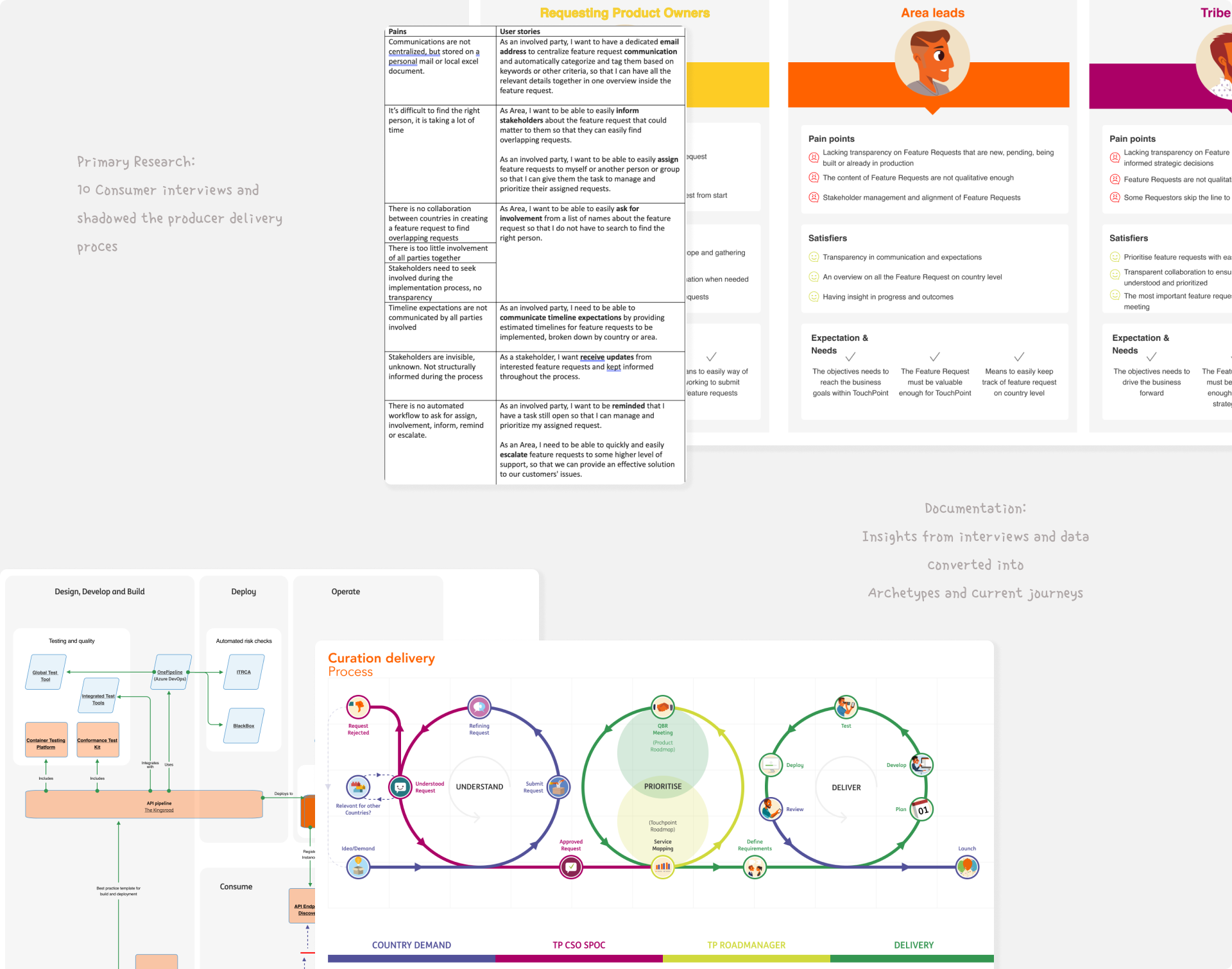
I mapped disconnects between producer capabilities and consumer expectations, then designed a transparent framework that made standards, responsibilities and review moments visible.
The model introduced explicit roles for policy review and ownership, regular review cycles, and a clearer baseline for when a service was ready to be published and reused.
Governance did not need to sit outside the experience. By turning policies and quality requirements into a transparent journey, the platform could increase accountability while making self-service easier for producer teams.
I led the design of supporting concepts including a policy management tool, dashboard and publishing workflow. These made status, responsibilities and quality checkpoints visible to producers and reviewers rather than leaving the model as documentation alone.
A repeatable path from policy to publishing, clearer readiness criteria and a stronger documentation baseline — reducing ambiguity for producers and increasing confidence for consumers.
EVIDENCE · PROTOTYPING
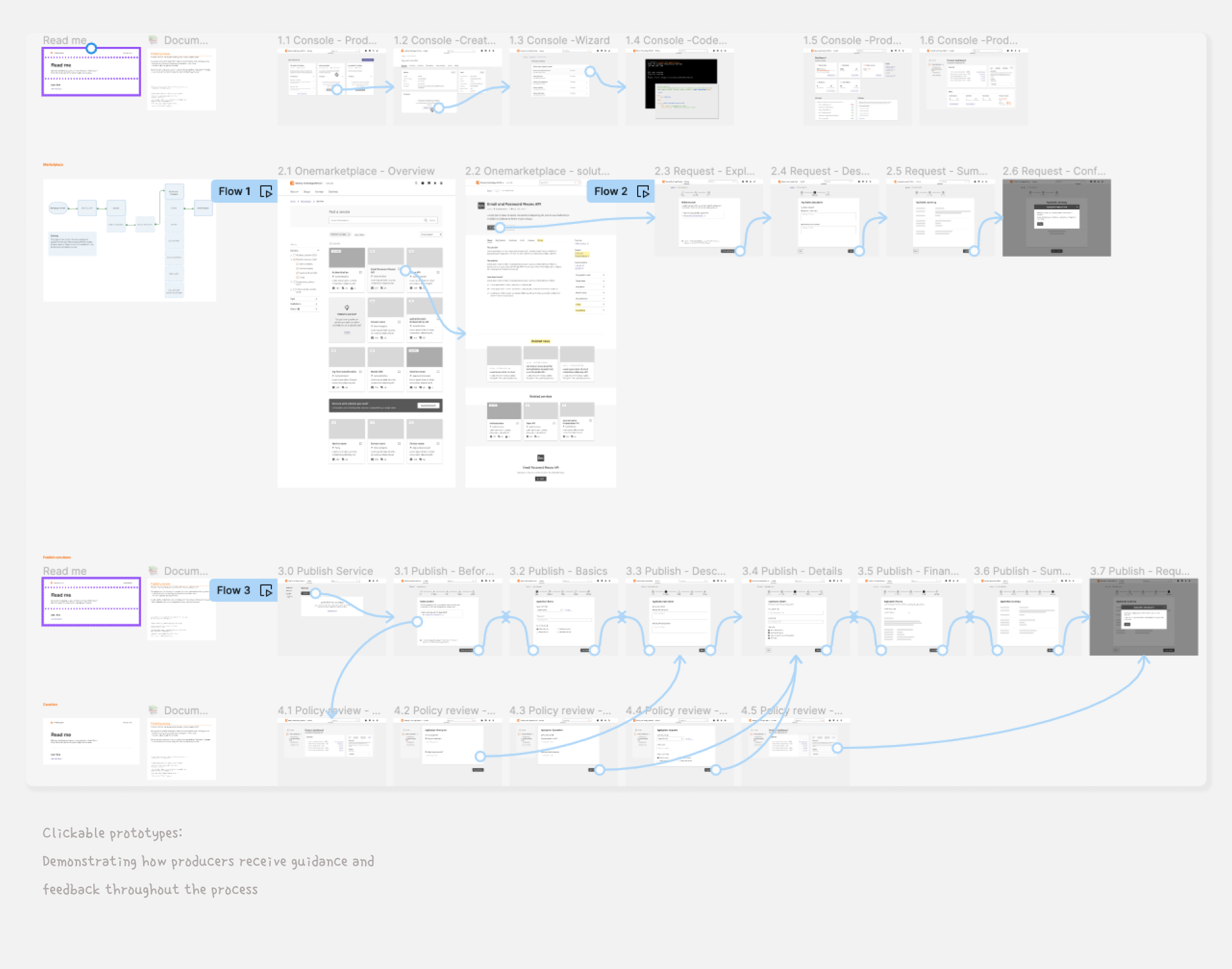
Clickable flows explored how producers would publish a service, receive guidance, encounter quality requirements and move through policy review. This made the governance model testable as an experience.
05 · SCALING THE CHANGE
The work established more than a new experience. Research created a shared understanding of why adoption was difficult; the service model connected fragmented consumer and producer touchpoints; and curation translated quality expectations into explicit roles, policies and publishing practices teams could work from.
I also helped establish a Centre of Expertise that connected previously siloed designers around shared practices and direction — extending the same principle beyond the platform: moving from isolated design activity towards a more coherent design capability.
IMPACT & DIRECTION
By following adoption beyond the interface, I helped shift the conversation from building another marketplace towards designing the conditions that make reuse credible: discoverability, quality, guidance, ownership and support.
The work connected those conditions in a shared service model and translated governance into repeatable producer journeys, quality checkpoints and publishing practices. This gave ING a clearer, more self-service-oriented foundation for scaling internal technology reuse across teams.