IVO RECHTSPRAAK · SERVICE DESIGN · DIGITAL TRANSFORMATION

Making judicial services easier to navigate.

Across two major assignments at IVO Rechtspraak, I led Service Design work across both citizen-facing and internal services — using research to change how problems were framed, how priorities were set and how teams translated user needs into delivery.

TL;DR

  • Led Service Design across two distinct assignments within IVO Rechtspraak
  • Reframed Familial Administration from digitising judicial processes towards designing around civilian needs
  • Shifted MijnKennisOmgeving from fragmented stakeholder requests towards evidence-backed priorities and clearer delivery
  • Used accessibility, journeys and research as shared foundations for decision-making across both services
ROLE
Service Designer
FOCUS
Service transformation · Accessibility
SCOPE
Citizen & employee services
PERIOD
2019 — 2023

TWO ASSIGNMENTS · ONE ORGANISATION

Two assignments showed where experience problems really began.

The services had different users and purposes, but both exposed the same pattern: interface quality depended on decisions made earlier about processes, information, priorities, standards and delivery. My role increasingly focused on making those dependencies visible and turning them into direction teams could act on.

01 · Familial Administration - Citizen-facing service transformation.

Researching and redesigning a complex legal and financial journey around guidance, transparency and self-service.

02 · MijnKennisOmgeving - Employee experience & ways of working.

Improving an internal knowledge service while strengthening prioritisation, stakeholder alignment, accessibility and user-centred delivery.

THE CHALLENGE

The visible UX problems started further upstream.

Judicial services bring together legislation, established processes, specialist terminology, technology and multiple groups with very different needs.

For civilians, that complexity appeared as paper-heavy processes, legal terminology, unclear expectations and limited visibility of progress. Internally, teams faced another expression of the same problem: legacy technology, competing priorities and development work that was difficult to steer around user value.

I used Service Design to move the conversation beyond isolated interface problems and towards the service conditions producing them.

User needs Process Information Ownership Technology Service experience
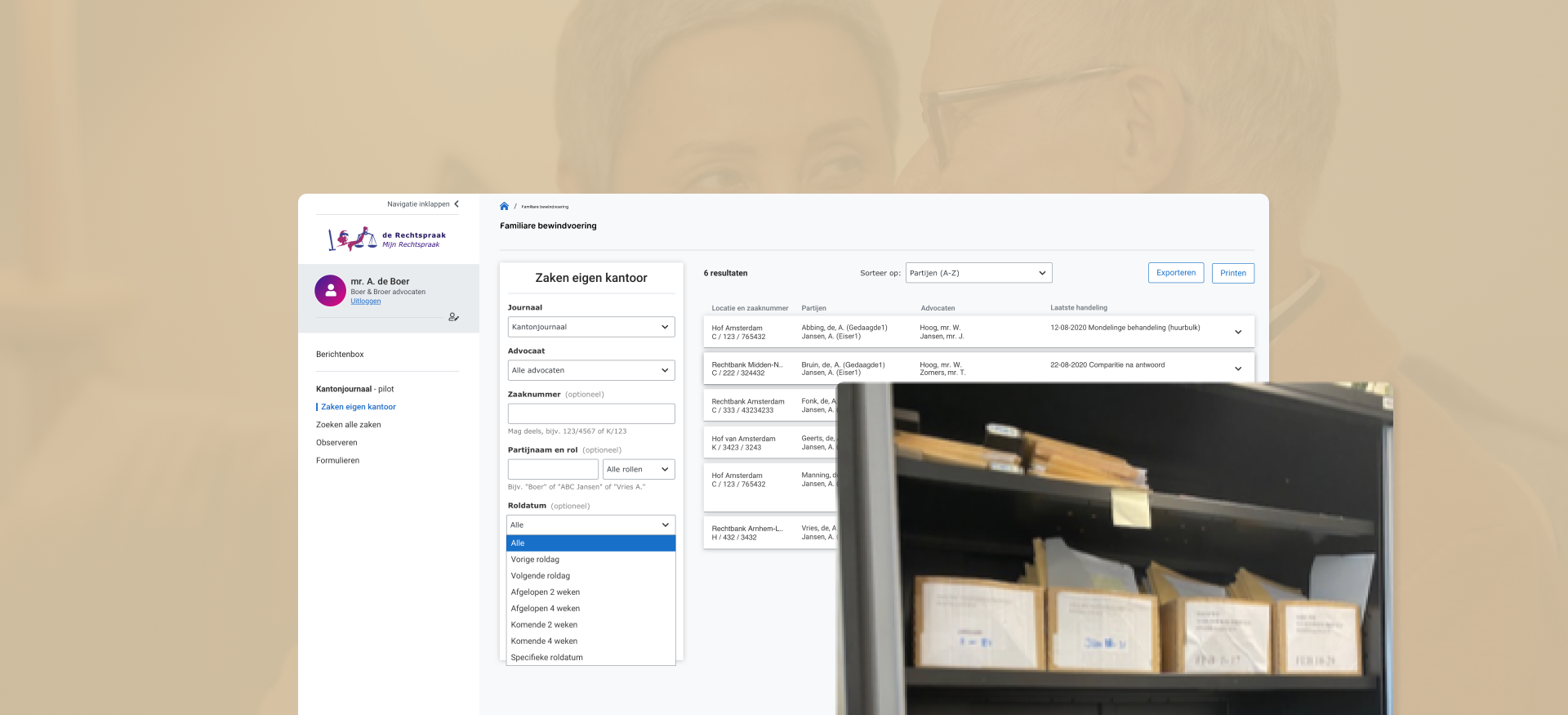
Rechtspraak digital service interface shown alongside the physical casework environment.

01 · ASSIGNMENT 01 — FAMILIAL ADMINISTRATION

Research changed the problem from user error to service design.

I started with the people using and delivering Familial Administration, mapping how civilian needs connected to judicial processes, terminology and information flows.

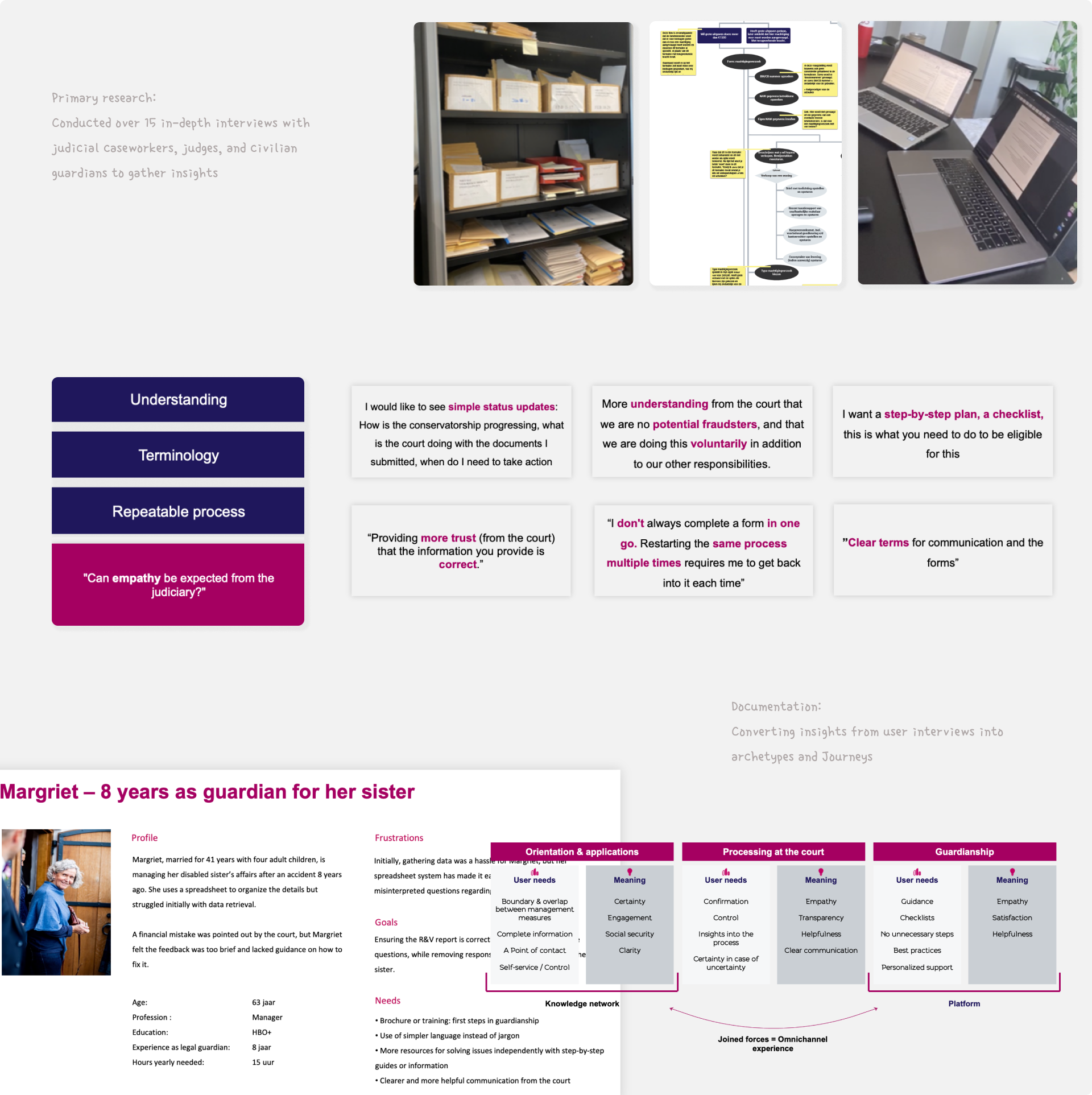
Research evidence including interviews, judicial files, user needs, archetypes and service journeys.
PRIMARY RESEARCH USERS · JUDICIAL PROFESSIONALS · SERVICE JOURNEYS

Research changed how the problem was understood.

For Familial Administration, I worked with civilians managing important legal and financial responsibilities for relatives, alongside judges and judicial caseworkers. More than 15 in-depth interviews were translated into journeys, archetypes and process flows.

The recurring needs were not cosmetic: people needed clearer status information, step-by-step guidance, consistent terminology and greater confidence that they were completing the process correctly.

WHAT CHANGED

The evidence reframed errors and incomplete submissions from a user problem into a service problem. Instead of asking people to adapt to the process, we could redesign the process around what they needed to succeed.
02 · FAMILIAL ADMINISTRATION — SERVICE DIRECTION

The journey became a shared frame for service decisions.

The evidence showed that improving individual forms would only address part of the problem. I used the end-to-end journey to connect terminology, communication, process structure and internal workflows — giving stakeholders a shared basis for deciding where the service needed to change.

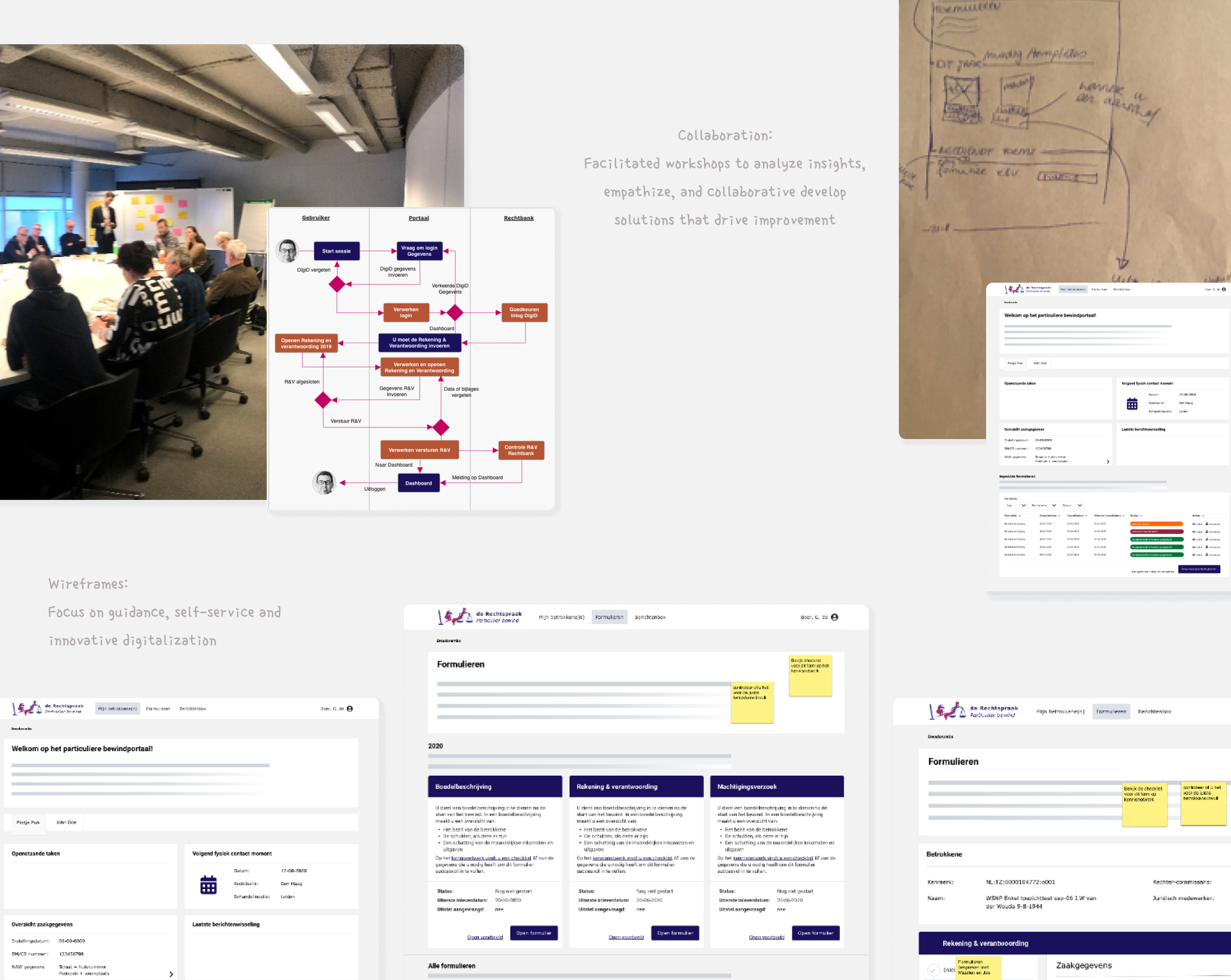
Stakeholder workshop, service flow and early digital service concepts.
SERVICE DIRECTION JOURNEYS · STAKEHOLDERS · PRIORITISATION

I used the journey to create a shared frame for decisions.

I facilitated workshops and used journeys and service flows to connect user needs with the organisational and technical dependencies behind them. That gave stakeholders a common view of the service rather than separate views of individual touchpoints.

Research Shared understanding Service journey Priorities Delivery
WHY IT MATTERED

Design could move upstream: evidence became a way to decide where the service needed to change, rather than simply responding to predefined interface requests.

03 · FAMILIAL ADMINISTRATION — SERVICE TRANSFORMATION

The direction shifted from digitising paperwork to redesigning the service.

The existing service relied heavily on documentation, specialist terminology and interactions that made sense from a judicial perspective but were difficult for civilians to navigate.

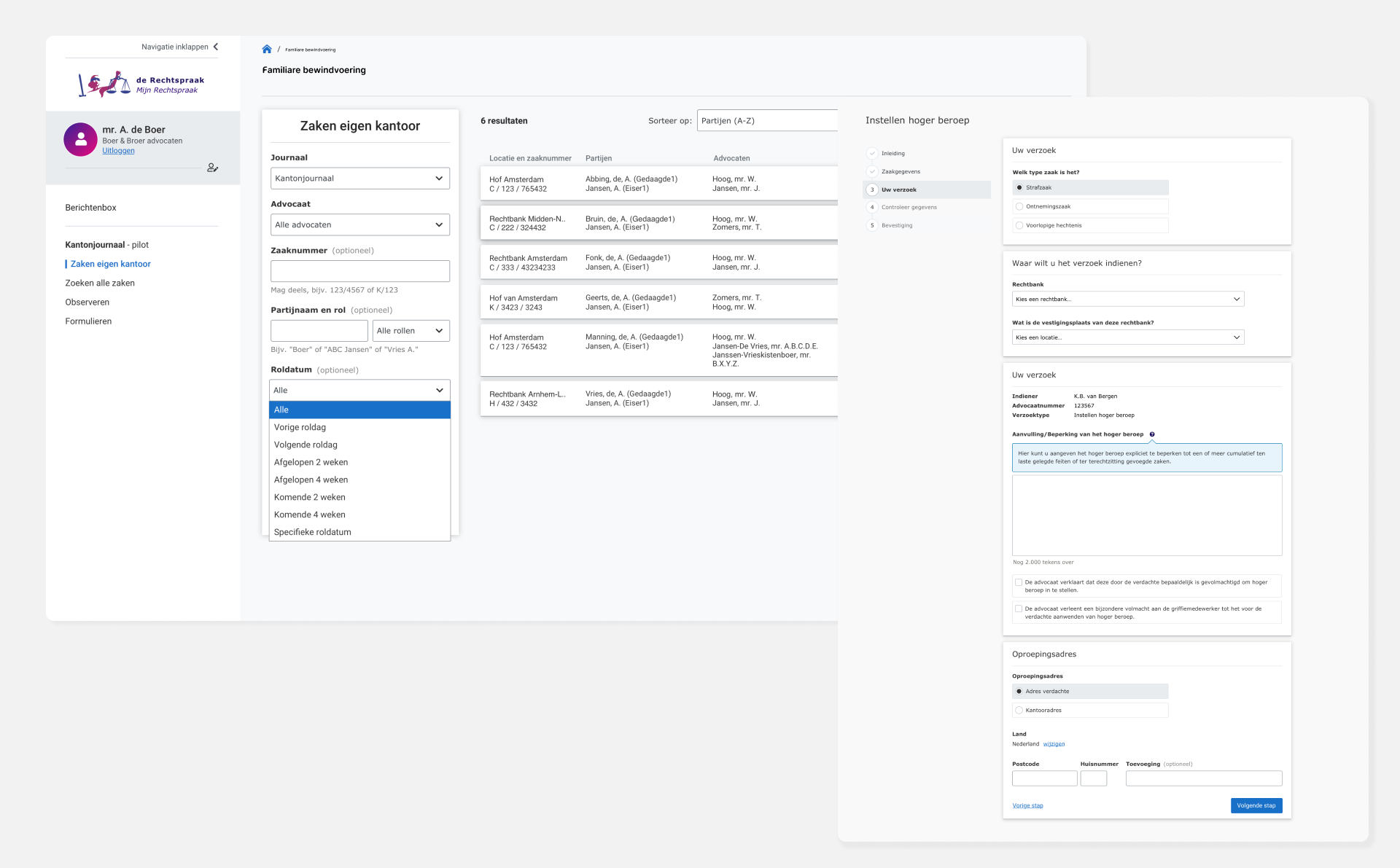
Service design process showing workshops, journeys, wireframes and portal concepts.
CITIZEN SERVICE GUIDANCE · SELF-SERVICE · TRANSPARENCY

The digital experience became part of a clearer service model.

I led workshops and design activities with civilian and judicial groups, using the research to align both perspectives and shape a service spanning forms, guidance, status information and the portal.

Guidance

Make requirements and next steps explicit.

Self-service

Help civilians complete more independently.

Transparency

Make status and progress visible.

Continuity

Connect forms, requests and progress into one journey.

Paper & fragmented interactions Guided digital journey Clearer communication Greater self-service
THE SHIFT

The work focused on changing how civilians and the judiciary interacted, rather than reproducing the existing paperwork in a digital interface.

04 · ASSIGNMENT 02 — MIJNKENNISOMGEVING

User evidence changed how work was prioritised and shaped.

Work on MijnKennisOmgeving exposed another side of the same organisational challenge: legacy technology, competing stakeholder priorities and fragmented requests made it difficult to improve the employee experience consistently.

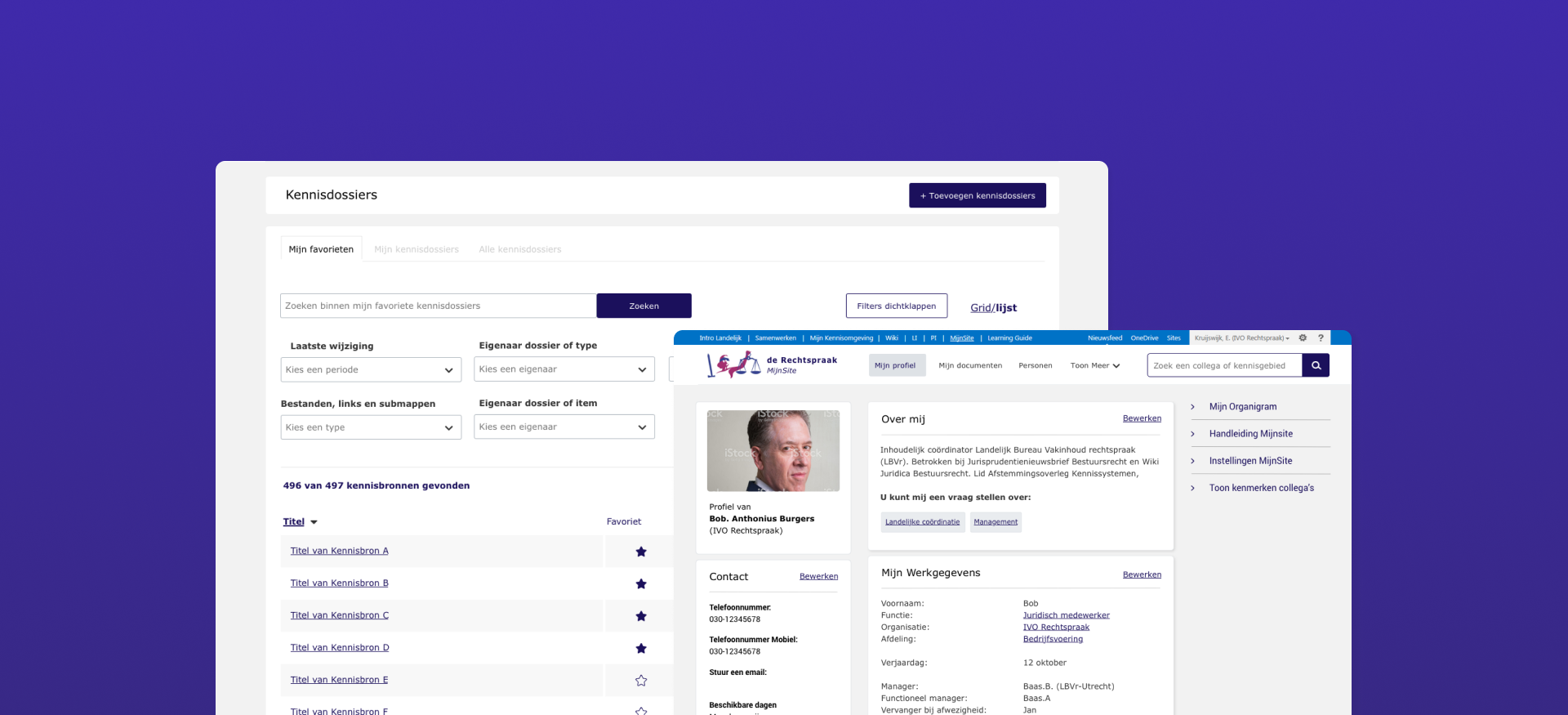
Knowledge environment concepts and prototypes for Rechtspraak employees.
WAYS OF WORKING PRIORITISATION · ALIGNMENT · DELIVERY

I shifted the team from stakeholder requests towards evidence-backed priorities.

I translated research into prioritised user needs, made process and technical constraints visible and helped stakeholders and development teams work from a clearer shared scope.

I structured stakeholder engagement, translated evidence into user stories and helped prioritise team output around user value. This created a clearer basis for negotiating scope with stakeholders instead of allowing individual requests to determine the roadmap.

Ad-hoc requests Evidence-backed priorities Shared scope Structured delivery
LEADERSHIP IN PRACTICE

The intervention was not only a redesigned product. It improved the system through which the team understood needs, negotiated priorities and moved work into delivery.

05 · MIJNKENNISOMGEVING — DELIVERY FOUNDATIONS

Accessibility became a shared standard for service quality.

I used accessibility alongside research to expose limitations in existing processes and establish clearer requirements for new experiences.

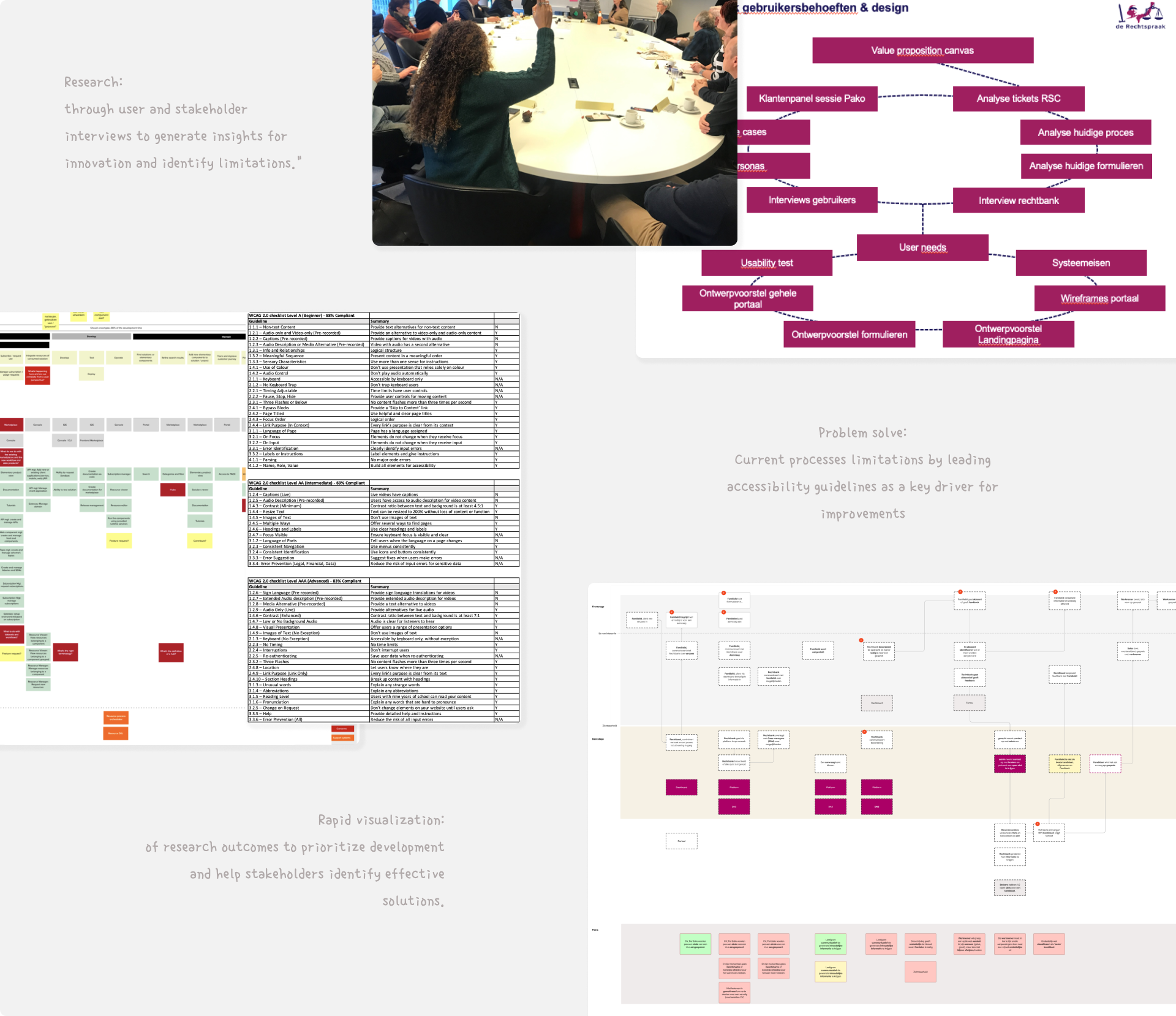
Research, accessibility analysis and process mapping used to prioritise improvements.
QUALITY FOUNDATION USER NEEDS · WCAG · DELIVERY

Accessibility gave design and delivery a common baseline.

Accessibility requirements were brought into the design process rather than treated as a compliance activity at the end. This gave teams a more explicit baseline for evaluating priorities and design decisions, including within the constraints of legacy platforms.

User needs Accessibility standards Design requirements Delivery priorities
WHAT THIS ENABLED

Accessibility became part of defining service quality: clearer language, more understandable processes and experiences that could work for a broader range of users.

06 · WHAT CONNECTED BOTH ASSIGNMENTS

Across both assignments, the intervention moved upstream.

Familial Administration and MijnKennisOmgeving served different users and purposes, but both changed when user evidence became part of earlier decisions: how the problem was framed, which needs were prioritised and what teams carried into delivery.

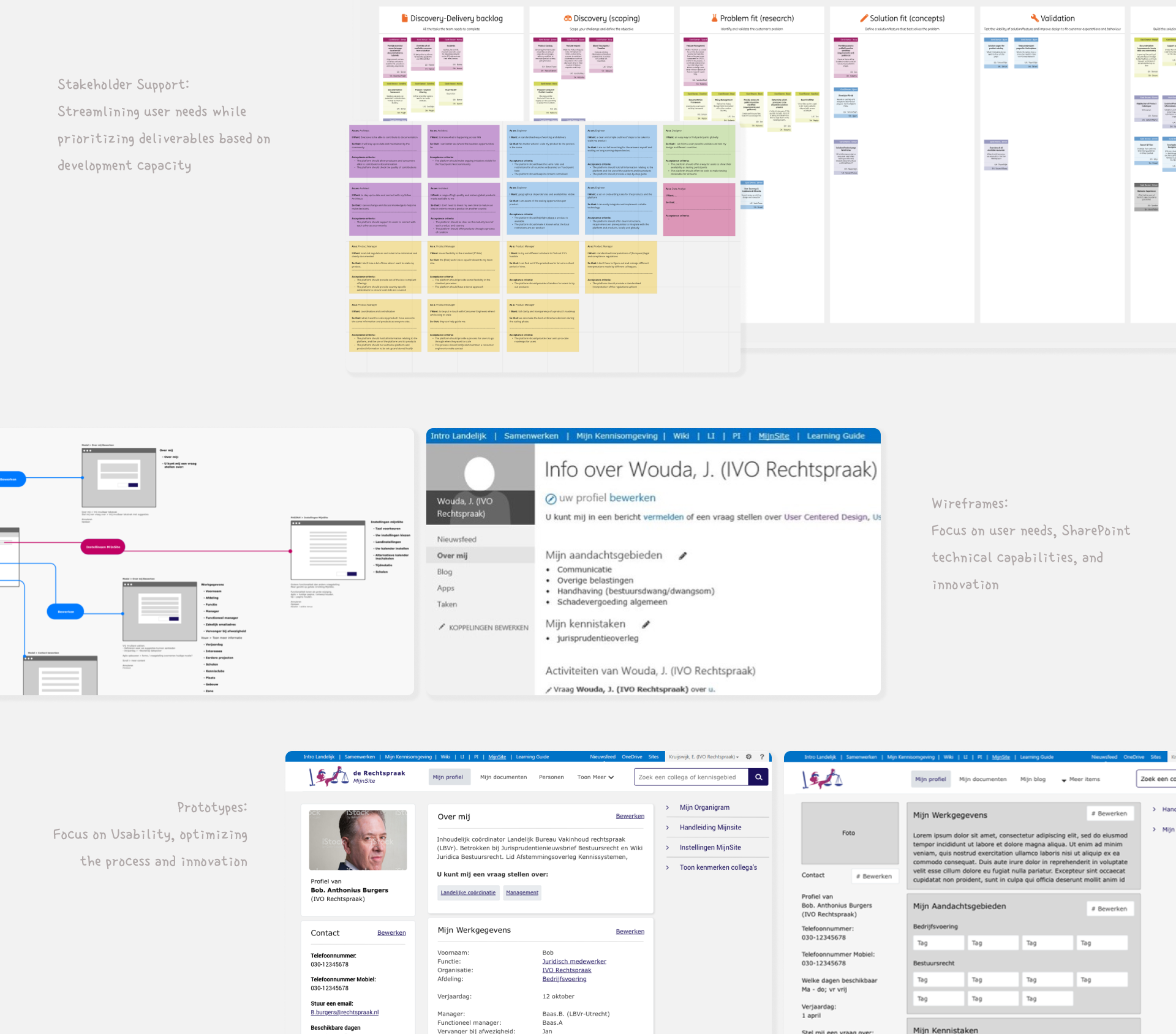
Discovery and delivery backlog, user flows and prototypes used to structure team delivery.
DESIGN CAPABILITY EVIDENCE · STRUCTURE · WAYS OF WORKING

The recurring value was connecting evidence to decisions and delivery.

A clear form depended on understandable terminology. A useful portal depended on a coherent journey. A sustainable redesign depended on prioritisation. Accessibility depended on shared standards. Consistent services depended on stakeholders and delivery teams working from the same understanding of user needs.

I connected those layers by using research to create shared understanding, making journeys and processes visible, aligning stakeholders around priorities and translating those decisions into experiences teams could implement.

User evidence Service journeys Shared priorities Standards & accessibility Delivery Coherent services
ORGANISATIONAL VALUE

Service Design moved beyond individual interfaces, creating a clearer connection between user evidence, service decisions and delivery — and a more structured foundation for improving judicial services over time.

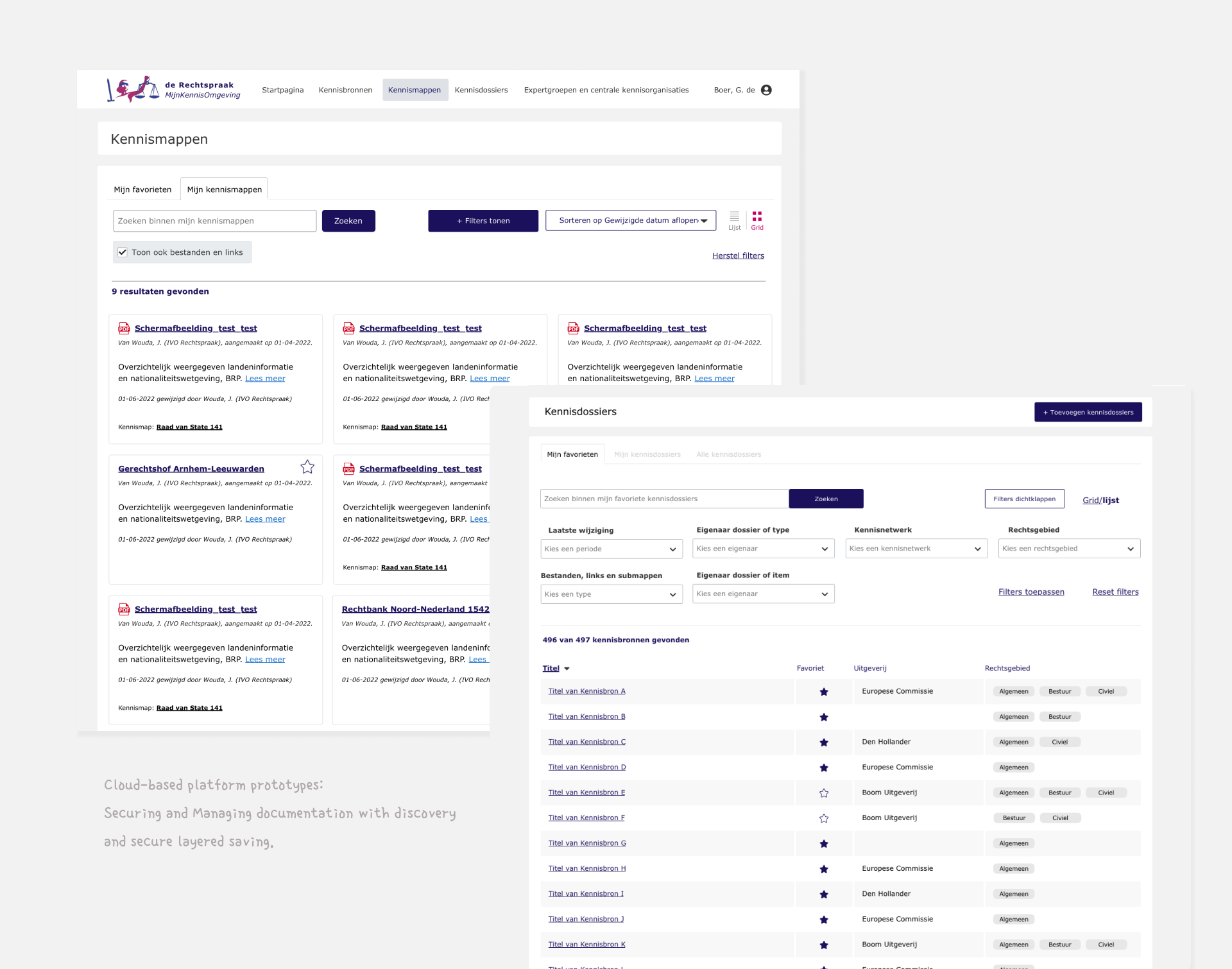
Knowledge platform concepts showing the move towards structured, governed knowledge services.

IMPACT & DIRECTION

Designing clarity into complex public services.

Working across citizen-facing and employee services showed that complexity rarely belongs to one interface. It emerges across journeys, processes, terminology, technology, ownership and the way organisations make decisions.

My contribution was to make those dependencies visible and actionable: turning user evidence into shared direction, shifting priorities towards user value and creating clearer structures for design and delivery decisions.

The work moved beyond redesigned screens towards clearer journeys, stronger accessibility, more structured prioritisation and a more coherent way of shaping digital judicial services.