SERVICENOW IMPACT · SERVICE DESIGN · UX MATURITY · AI AGENTS

Building the design capability behind enterprise adoption.

I lead work to evolve how ServiceNow IMPACT approaches UX: using evidence across enterprise client engagements to identify recurring upstream problems, then translating those patterns into a more discovery-led, Service Design-oriented way of working.

TL;DR

  • Use evidence across enterprise engagements to identify recurring problems in how customer needs become delivery
  • Reframed recurring portal, taxonomy and form requests as symptoms of upstream service, ownership and governance issues
  • Developed a discovery-led engagement model that brings user needs and organisational context into decisions earlier
  • Turn client learning into principles and practices that can strengthen UX maturity across IMPACT
  • Help clients establish the service, knowledge and governance foundations required for effective AI Agents
ROLE
Lead UX / Service Design
FOCUS
UX maturity · Ways of working
SCOPE
IMPACT · Enterprise clients
PERIOD
2025 — Now

IN SHORT

THE PROBLEM

UX often entered after the solution path had already been shaped. What appeared to be a portal, form or taxonomy problem was often rooted further upstream in governance, ownership, processes and organisational decisions.

MY ROLE

Challenge how IMPACT moves from customer need to delivery, combining internal research with enterprise client engagements. I use recurring patterns to challenge solution-shaped requests and develop a more holistic, Service Design-led way of working.

THE DIRECTION

Move discovery and Service Design upstream, while there is still room to shape the problem and intervention. This brings user needs, governance and organisational context into decision-making before solutions are chosen.

THE CHALLENGE

The experience was often being shaped before UX entered the room.

Through internal interviews and process analysis, I mapped how IMPACT moves from customer need to delivery: where requests enter, when expertise is selected and which decisions become fixed before UX is involved.

The diagnosis was clear: requests often arrived solution-shaped, leaving limited room to understand the underlying need before an intervention was selected. I then used live client engagements to test whether that pattern held in practice.

01 · DIAGNOSING IMPACT

Mapping IMPACT revealed where UX lost influence.

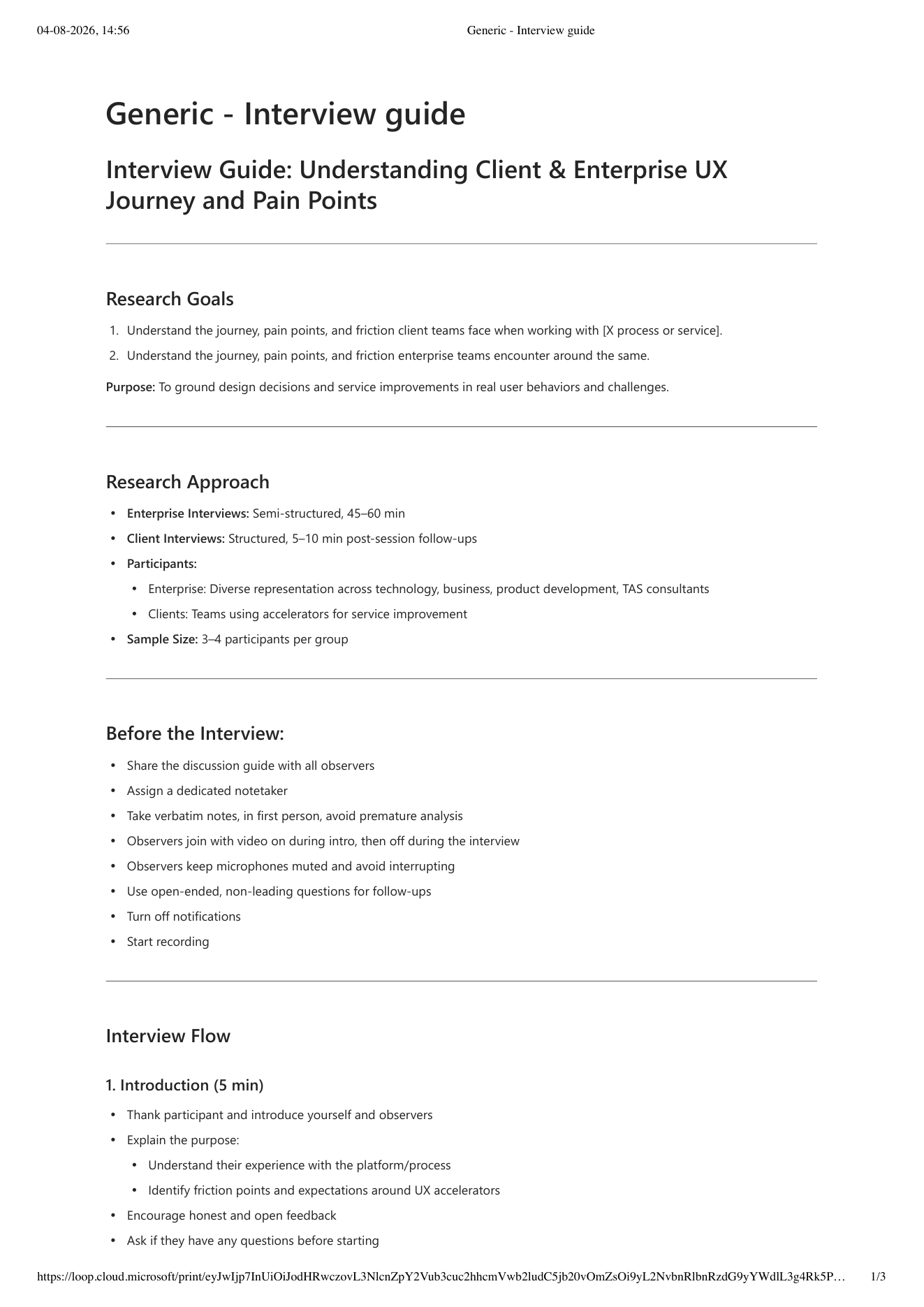
Interview guide used to understand client and enterprise UX journeys and pain points
INTERNAL RESEARCH · INTERVIEW GUIDE

Research before redesign. Interviews across client and enterprise perspectives examined how needs emerged, how support was selected and where friction appeared between idea, delivery and release.

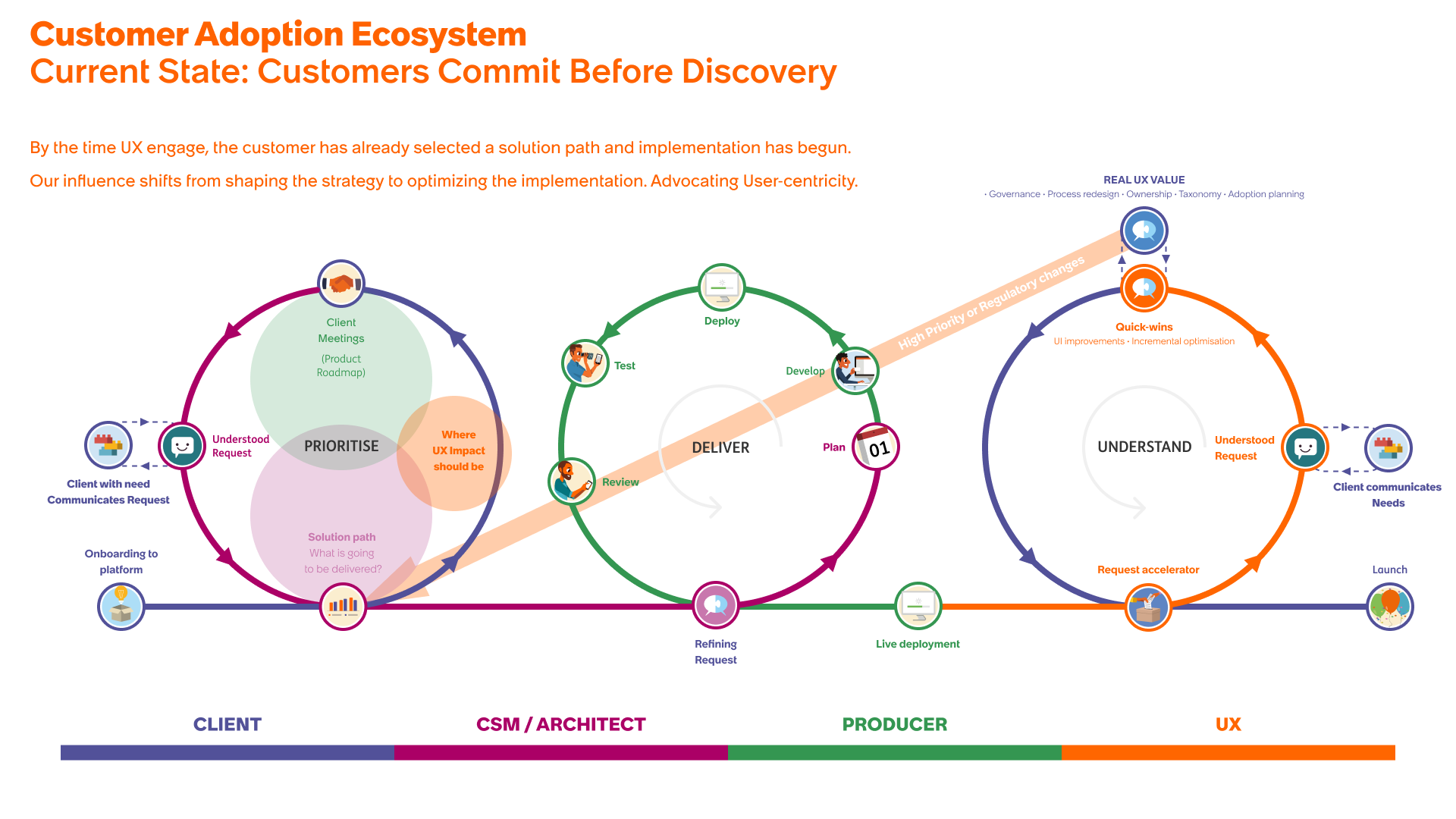
Current-state customer adoption ecosystem
CURRENT STATE

Customers were committing before discovery. Mapping the relationship between client, architecture, delivery and UX made the sequencing problem visible: UX frequently entered after a solution path had been selected.

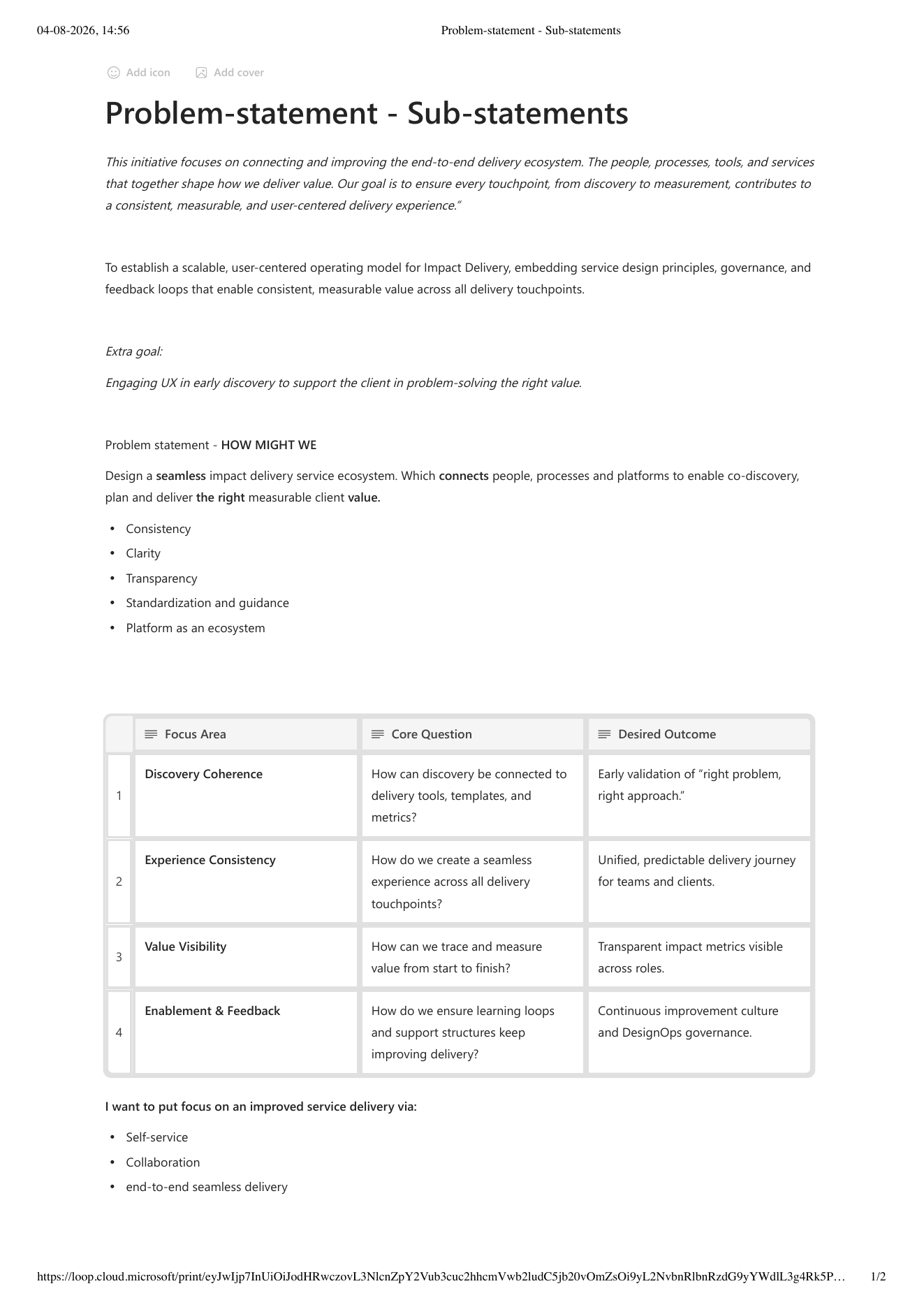
Problem framing for a more coherent end-to-end IMPACT delivery ecosystem
SYNTHESIS · PROBLEM FRAMING

The diagnosis became an organisational design problem. The emerging direction connected early discovery, experience consistency, value visibility and feedback into one end-to-end delivery ecosystem.

02 · TESTING THE DIAGNOSIS

Different client requests exposed the same upstream pattern.

I used live enterprise engagements to test whether the internal diagnosis held in practice. Across different organisations and request types, visible UX problems repeatedly led back to earlier decisions about service structure, ownership, information and governance.

UK GOVERNMENT UX MATURITY · SERVICE DESIGN · CHANGE REQUESTS

Building UX maturity across UK public services.

Through a wider UK Government digital transformation track, I supported the Home Office, Defra and the NHS across UX maturity, taxonomy, service structures and individual journeys.

This became particularly tangible in the Home Office Change Request process. Journeys had grown around organisational and information requirements, making them long and difficult to complete. Rather than treating this as a form-design problem, I traced each requirement back to the underlying business need: what information was actually required, who needed it, what the platform already knew and when it became relevant.

Business need Information required Decision model Form / tool User experience

This created two levels of intervention: improve the immediate experience while challenging the decisions, requirements and ways of working producing that experience in the first place.
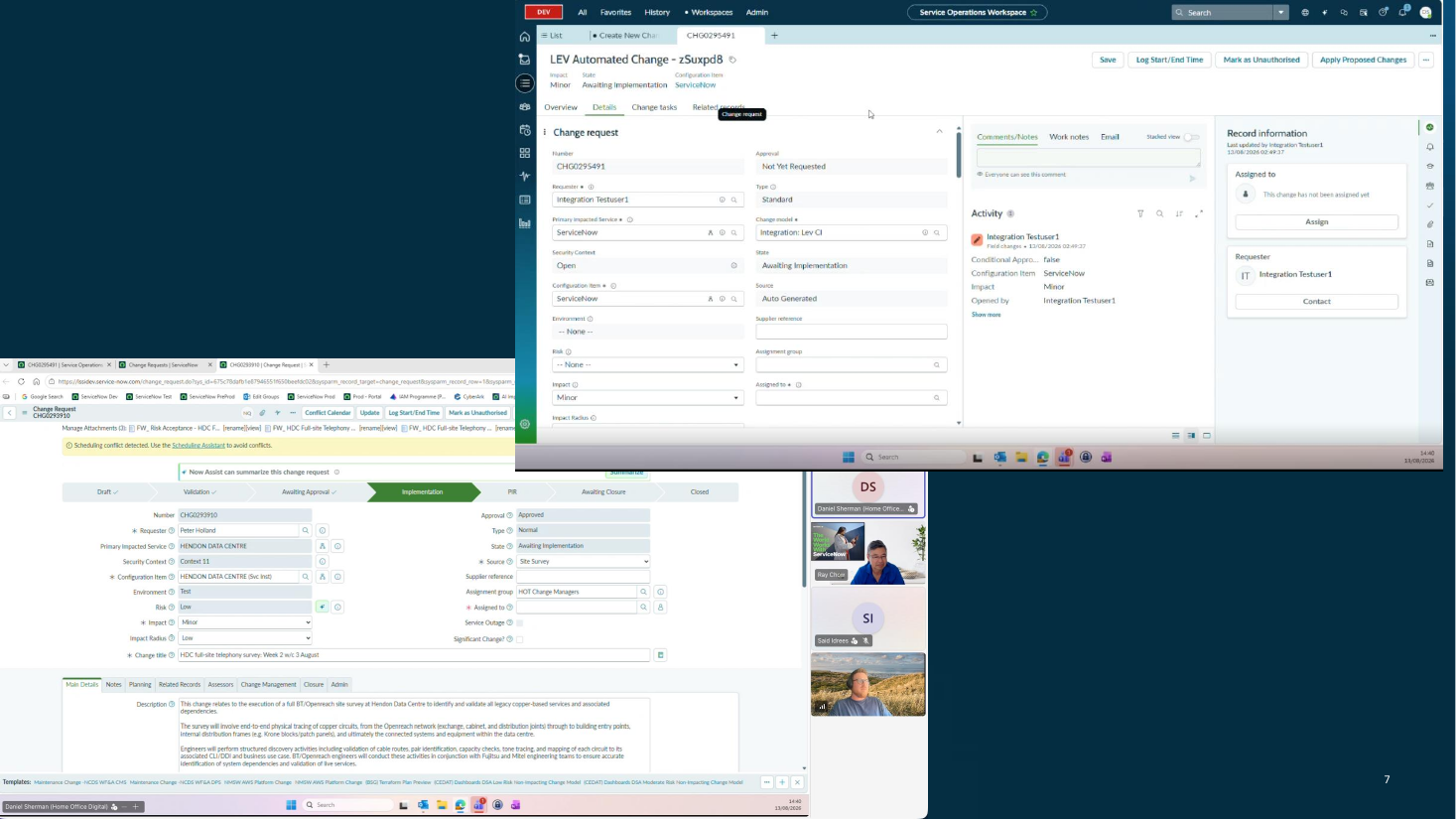
Home Office Change Request form review showing the existing SOW experience
HOME OFFICE · FORM REVIEW

The work itself. Review of the existing Change Request experience, used to identify where complexity, guidance and requirements were creating friction.
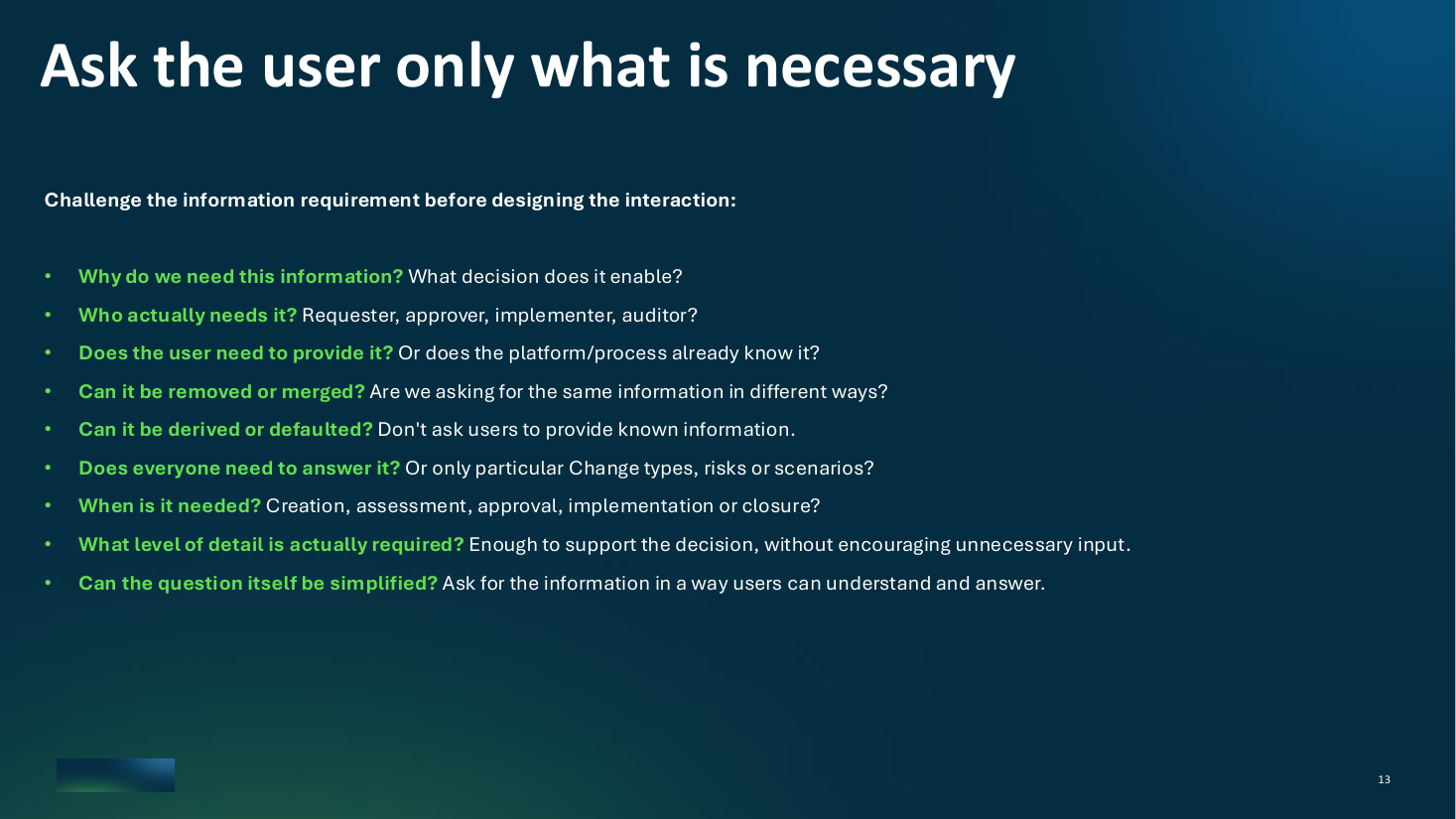
Home Office analysis challenging which information users actually need to provide
REQUIREMENTS ANALYSIS

Challenge the requirement before the interaction. The review traced fields back to the decision they support, who needs the information and when it becomes relevant.

WHAT THIS DEMONSTRATED

UX maturity was not about adding more design activity. It meant helping teams bring user needs into earlier decisions, from service structure and information requirements to the way work was prioritised and delivered.
ARM LIMITED JOURNEYS · TAXONOMY

Reframing taxonomy around journeys changed the intervention.

ARM asked for support simplifying an Employee Center taxonomy that had grown around organisational ownership. But employees did not experience HR, IT and external systems as separate structures, they were trying to complete tasks that crossed all three.

I reframed the work around those employee journeys first: what people were trying to achieve, where tasks crossed organisational boundaries, and how terminology and navigation could support that journey rather than expose the organisation behind it.

Employee need Journey Taxonomy Information architecture Governance

This shifted the work from reorganising labels and menus to creating a task-based structure that could remain coherent across teams, systems and future services.

WHAT THIS DEMONSTRATED

Findability could not be solved by taxonomy alone. Designing around employee journeys exposed where shared terminology, cross-functional ownership and governance were needed to create a coherent service.

General Organization for Social Insurance SERVICE FOUNDATIONS · UX MATURITY

Portal recommendations exposed the need for shared service foundations.

Across GOSI and GOFSI, the initial focus was on improving the employee experience across multiple departments and portal touchpoints. Reviews of navigation, content, service entry points and patterns revealed a broader challenge: the experience was developing without a sufficiently shared set of user-centred principles behind it.

I used the platform as an entry point to connect individual recommendations to wider questions around taxonomy, ownership, consistency and how services should be structured around employee needs rather than departmental boundaries.

Portal experience User needs Service structure Ownership UX maturity

This created a clearer distinction between immediate experience improvements and the foundations required to make future improvements consistent and scalable.

WHAT THIS DEMONSTRATED

Improving individual touchpoints was only part of the challenge. Sustainable improvement required shared principles, clearer ownership and a service structure that could guide decisions beyond a single engagement.

AI AGENTS AI READINESS · GOVERNANCE · SERVICE FOUNDATIONS

AI could not compensate for weak service foundations.

As clients began exploring AI Agents, I worked with them beyond the end experience itself. An effective agent depends on the service environment behind it: clear ownership, usable knowledge, coherent taxonomy, reliable processes and governance.

Clients sometimes expected AI to solve existing findability problems. I reframed that expectation around the foundations AI depends on: structured information, clear ownership and governance.

User need Service foundations Knowledge & taxonomy Ownership & governance AI Agent

This shifted the conversation from what the AI Agent should do to what needed to mature across the organisation for it to work effectively.

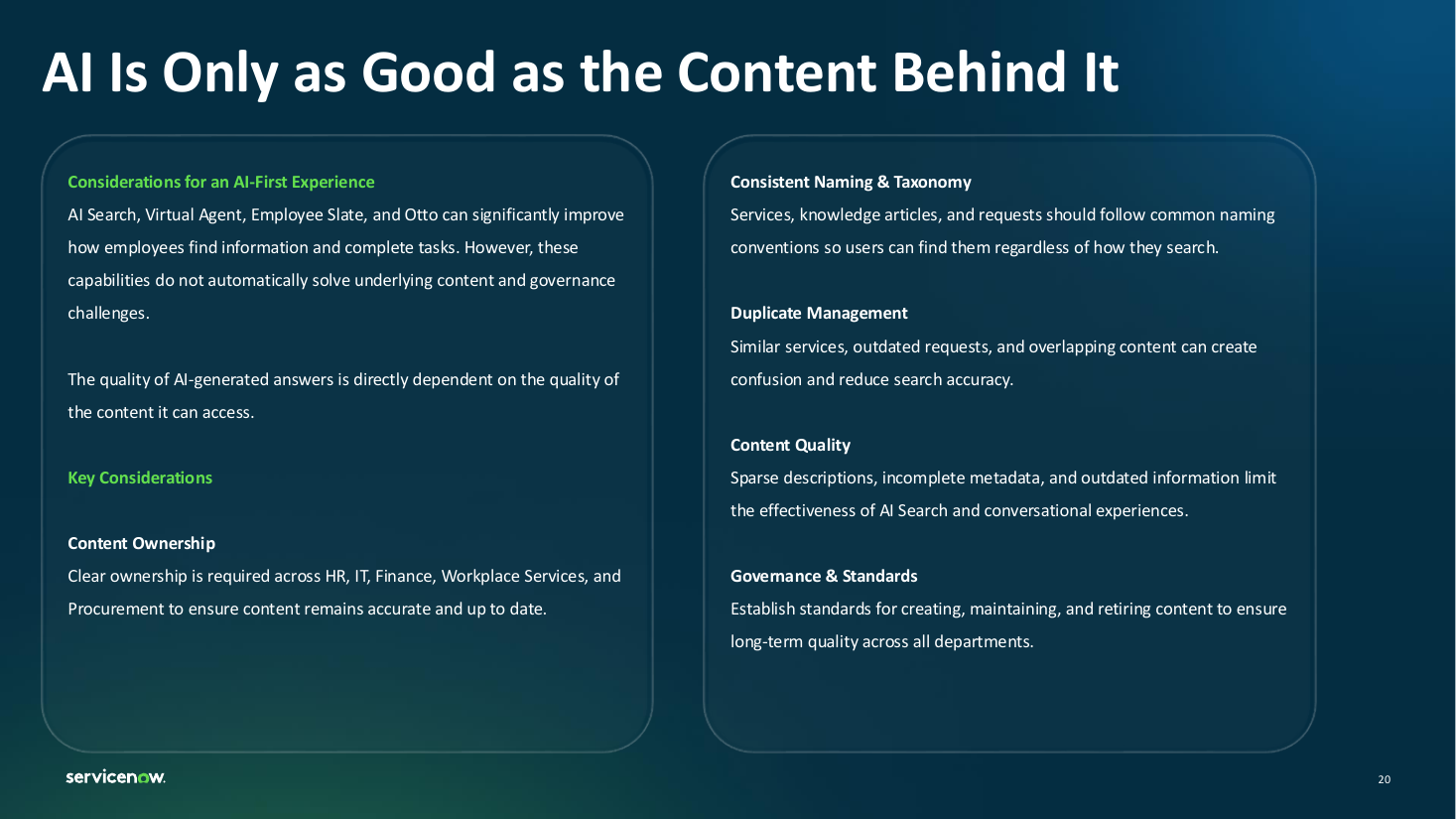
ADNOC review showing content governance requirements behind an AI-first employee experience
ADNOC · AI-FIRST EXPERIENCE

AI depends on what sits behind it. Recommendations connected AI Search and conversational experiences to content quality, ownership, taxonomy and governance.

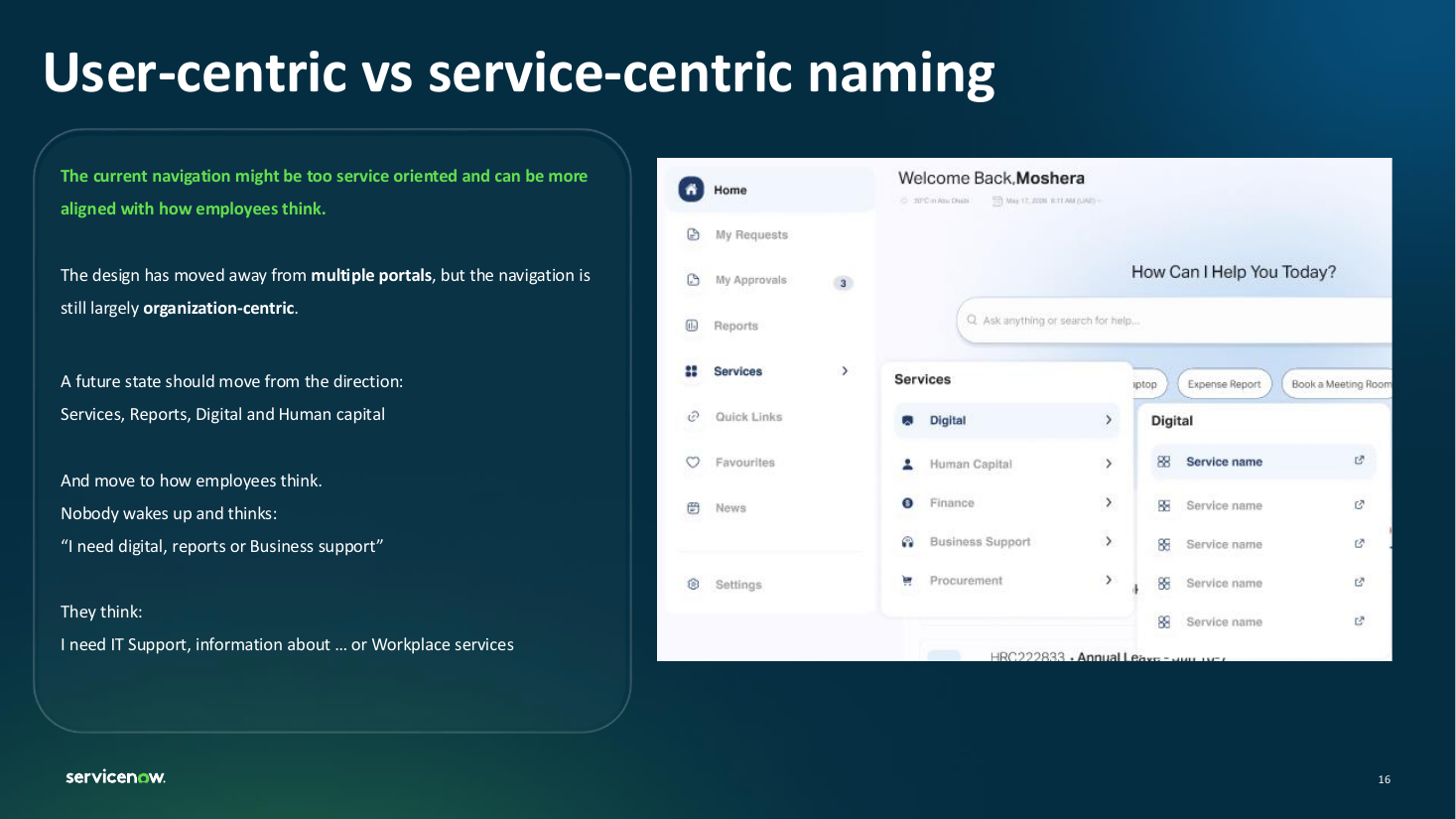
ADNOC review comparing organisation-centric navigation with employee-centred naming
ADNOC · SERVICE STRUCTURE

From organisational structure to employee intent. The review challenged service-centric navigation and reframed it around how employees actually look for support.

WHAT THIS DEMONSTRATED

AI readiness was not only a technology challenge. It depended on the quality of the services, information and governance behind it. The agent was the interface; the foundation determined whether it could succeed.

03 · FROM PATTERN TO PRINCIPLES

Client evidence changed how I framed the intervention.

The recurring patterns pointed to a sequencing and decision-making problem rather than a missing UX deliverable.

Requests arrived solution-shaped.

Discover before committing.

Understand the problem before selecting the intervention.

UX entered after key decisions.

Move framing upstream.

Bring user evidence into the decisions that shape the service.

Problems crossed boundaries.

Work at service level.

Follow the problem across journeys, processes, ownership and technology.

Change depended on ownership.

Design for governance.

Make policies and decision rights part of the intervention.

04 · REDESIGNING THE ENGAGEMENT MODEL

I translated the diagnosis into a future-state model.

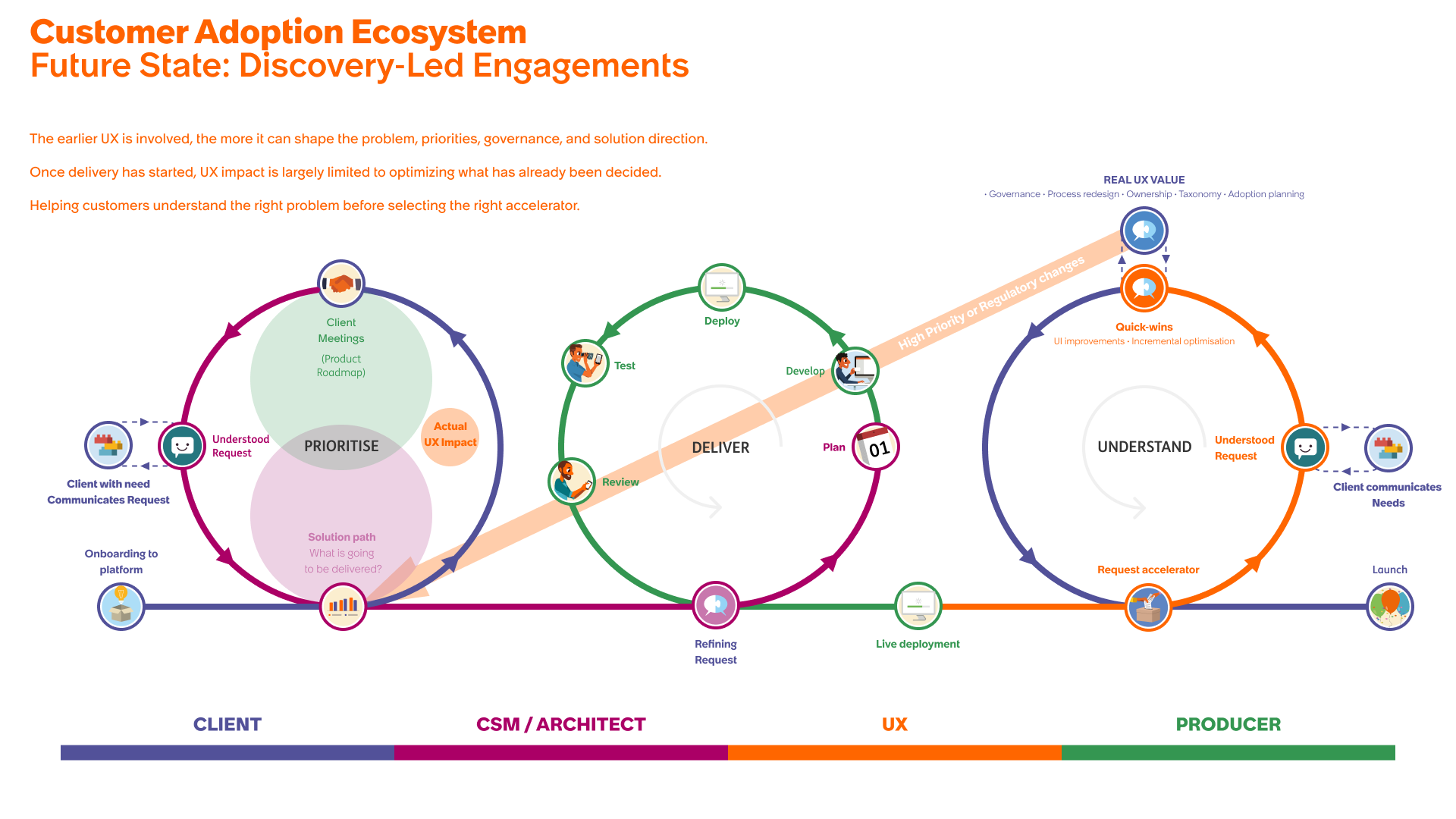
I translated the diagnosis into a future-state engagement model where discovery can clarify the problem, align stakeholders and determine the right level of intervention before delivery is fixed.

Future-state customer adoption ecosystem
FUTURE STATE

UX moves upstream. The role shifts from optimising implementation to helping shape the problem, priorities and intervention before delivery begins.

01

Discover

Users · business · organisation · context

02

Frame

Problem · outcome · intervention level

03

Align

Owners · stakeholders · decision rights

04

Shape

Journey · governance · policies · service

05

Learn

Delivery evidence · continuous improvement

05 · FROM MODEL TO PRACTICE

Making the approach work beyond individual engagements.

The next challenge is making this way of thinking repeatable beyond individual engagements. I use client evidence and internal collaboration to turn recurring patterns into shared principles for recognising upstream problems, involving the right expertise earlier and deciding when a request requires a service-level intervention.

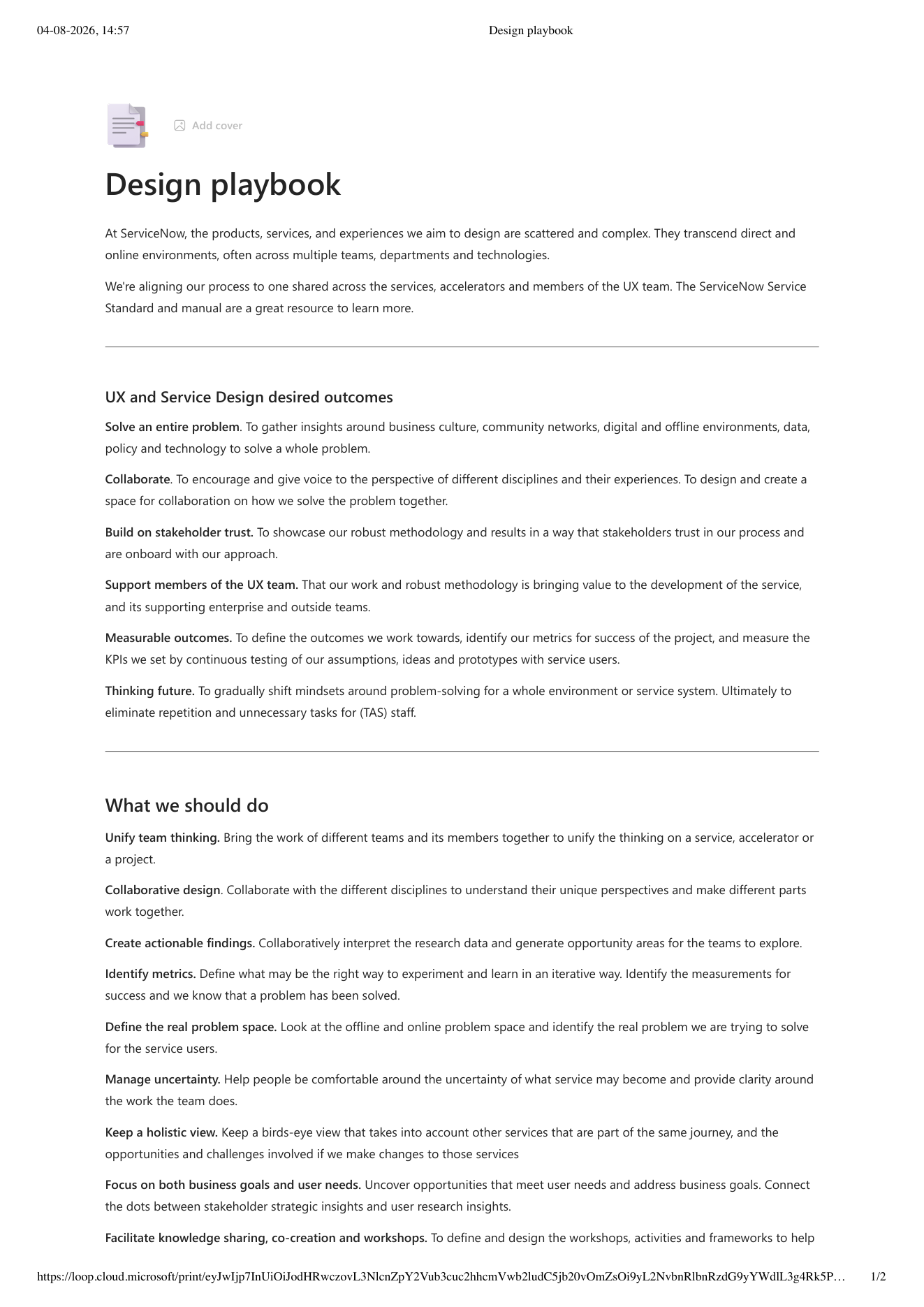
Internal Design Playbook defining shared UX and Service Design outcomes and ways of working
DESIGN PLAYBOOK · SHARED PRACTICE

Turning principles into a shared way of working. The playbook connected whole-problem thinking, collaboration, measurable outcomes and holistic service design into guidance the UX team could reuse.

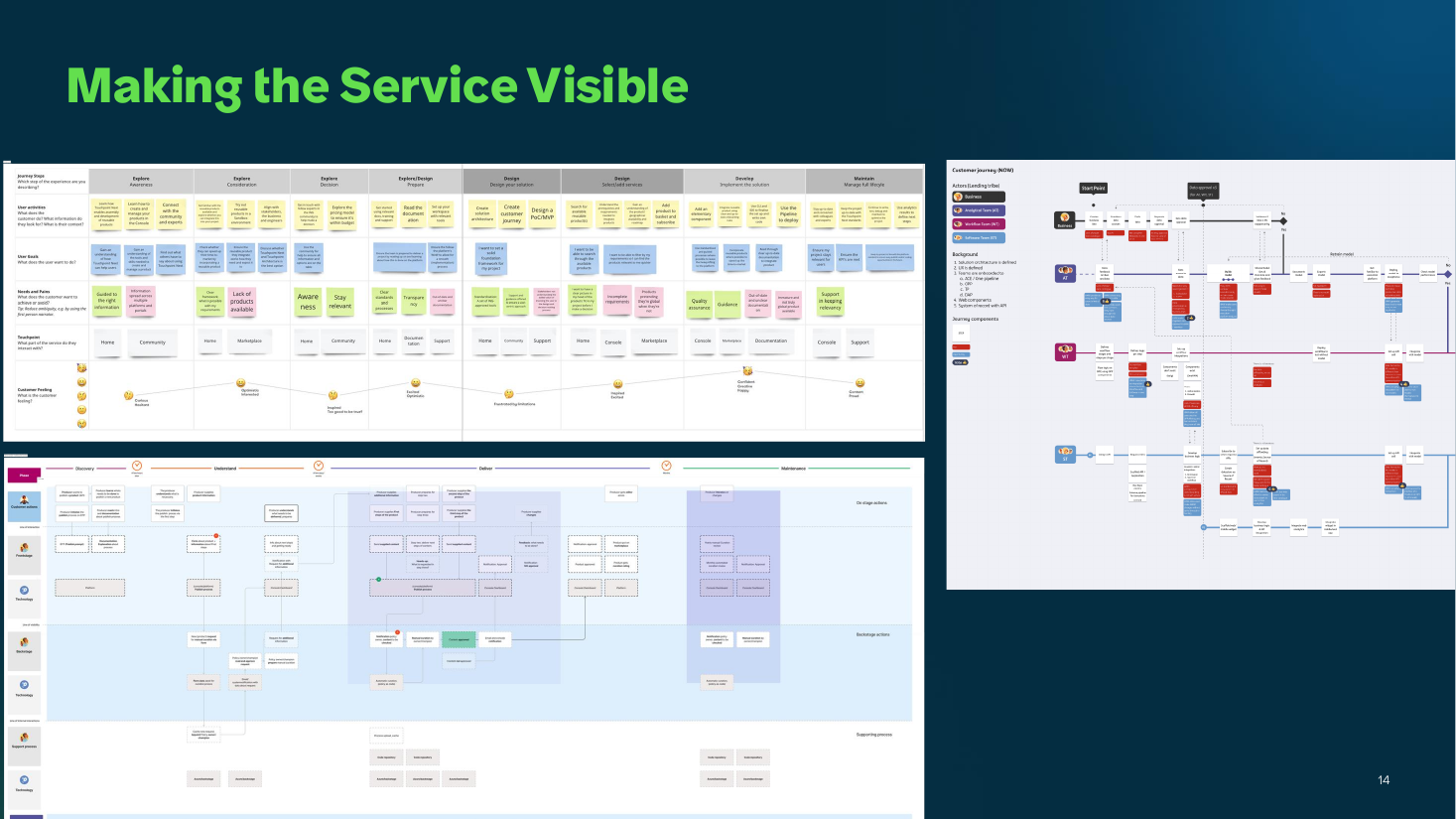
Service Design deck showing journey maps, service blueprints and service flows used to make services visible
INTERNAL SERVICE DESIGN DIRECTION

Making the service visible. Real journey, blueprint and service-flow examples supported the case for looking beyond the interface and connecting experience to delivery.

Client evidenceShared patternsEngagement principlesRepeatable practiceIMPACT capability
THE SHIFT

Rather than adding another design layer, the approach turns learning from individual engagements into a shared way to recognise upstream problems, involve the right expertise earlier and improve how future work is framed.

THE SHIFT

From improving predefined solutions to shaping how problems are understood.

Across engagements, visible UX problems repeatedly traced back to earlier decisions about requirements, ownership, taxonomy and governance.

The work therefore shifted from improving predefined solutions towards bringing discovery earlier — while there was still room to understand the underlying need and choose the right level of intervention.

Solution-shaped request Earlier discovery Service-level framing Shared direction Repeatable capability
ORGANISATIONAL VALUE

The value extends beyond individual engagements. By turning recurring client evidence into shared principles and a repeatable approach, Service Design can help IMPACT learn across customers — improving how future needs are understood, framed and translated into delivery.